


Brief Introduction

01
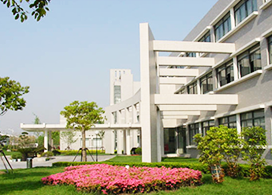
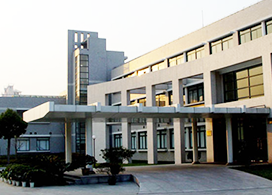
1932Shanghai Institute of Materia Medica (SIMM), Chinese Academy of Sciences (CAS), has the longest history as a comprehensive research institution for drug discovery in China. SIMM was evolved from Peking Institute of Materia Medica, Academia Sinica, founded in 1932 by Professor ZHAO Chenggu (T. Q. Chou). It was relocated to Wukang Road, Shanghai in 1933, then moved to Yueyang Road in 1953, and settled down in Zhang Jiang Hi-Tech Park, Pudong New District in 2003. It currently has over 1,000 employees, including 4 academicians of CAS and CAE, and more than 270 national-level high-tier talents. It also hosts over 1,800 master's and doctoral students and more than 140 postdoctoral fellows.
03
100+In line with the mission of “Discovering new drugs to relieve patients suffering from various diseases”, SIMM has developed and commercialized over 100 new drugs. Among them, a number of innovative drugs such as Artemether, Dimercaptosuccinic acid, and Huperzine A gained recognition both home and abroad. Recent years have witnessed the development of some novel drugs from SIMM, including Depsides salts, a modern Traditional Chinese Medicine (TCM), and Antofloxacin Hydrochloride, a novel fluoroquinolone antibacterial agent. In 2019, Oligomannate (compound code GV-971), the first-in-class drug invented and developed in China to improve cognitive function for those with mild to moderate Alzheimer’s disease, was granted approval by China’s National Medical Products Administration and went on sale. In 2023, the anti-COVID drugs Mindewei (VV116) and Xiannuoxin, as well as the anti-tumor drug Glumetinib, received conditional approval. In 2025, the non-small cell lung cancer (NSCLC) drug Limertinib was approved for market. In addition, a number of new drugs for malignant tumors, cardiovascular and cerebrovascular diseases, autoimmune diseases, and infectious diseases have entered clinical trials. SIMM has received over 330 scientific research awards, including 28 national top three awards.
02
National Research CentersSIMM focuses on basic and applied research in innovative drug discovery, addressing key scientific problems and developing new theories, methods, and technologies. Research priorities include malignant tumors, cardiovascular and cerebrovascular diseases, neuropsychiatric disorders, metabolic diseases, autoimmune diseases, and infectious diseases. The institute is home to eight national-level research centers: the State Key Laboratory of Original New Drug Research, the State Key Laboratory of Small Molecule Regulation of Life Processes, the State Key Laboratory of Immune Response and Immunotherapy, the National Engineering Research Center for Standardization of Traditional Chinese Medicine, the National Center for Drug Screening, the National Compound Library, the China-Serbia Joint Laboratory for Natural Products and Drug Discovery, and the China-Uzbekistan Joint Laboratory for New Drug Research. SIMM has also established a comprehensive, integrated, and internationally standardized innovative drug R&D system.
04
drug discoveryIn recent years, SIMM has seized opportunities for reform and development and actively participated in the construction of the Shanghai Science and Innovation Center. Aiming to "develop original new drugs" and "create leading technologies", the institute focuses on mechanism-based drug discovery and innovative R&D methods, addressing critical bottlenecks in China's biopharmaceutical industry. SIMM strives to become a world-class hub for original drug discovery and a leading international research center for pharmaceutical sciences.
05
interdisciplinary centersThrough several generations’ efforts, SIMM has evolved into a comprehensive drug research institution with complete disciplines, outstanding achievements, and a distinguished team of talents. It is recognized as one of the most important innovation bases for drug discovery in China and plays a key role in the historic transition from imitation-based to innovation-driven pharmaceutical research and industry.