


Researchers Develop a Versatile Bioorthogonal Theranostic Platform for Precision Cancer Therapy
Targeted protein degradation (TPD) has revolutionized drug discovery by enabling selective elimination of previously ‘undruggable’ proteins through molecular glue degraders (MGDs) and proteolysis-targeting chimeras (PROTACs). Despite this promise, nonspecific protein degradation in healthy tissues remains a major challenge, substantially limiting therapeutic windows and clinical translation.
Bioorthogonal chemistry offers a powerful solution for targeted prodrug activation, with the inverse electron-demand Diels–Alder (IEDDA) reaction between trans-cyclooctene (TCO) and tetrazine (Tz) standing out due to its ultrafast kinetics, exceptional selectivity, and favorable biocompatibility.
In a study published in the Journal of the American Chemical Society and featured as a Supplementary Cover article, a research team led by ZHANG Xuan and CHEN Yi at the Shanghai Institute of Materia Medica, Chinese Academy of Sciences, reported the development of a versatile bioorthogonal theranostic platform that enables relay-activated tumor cell imaging and targeted protein degradation.
The platform is built upon two complementary functional components: (1) XZ2223, a GSH-responsive precursor that releases both a bioorthogonal tetrazine trigger and a near-infrared (NIR) probe; and (2) TCO-caged prodrugs derived from CRBN-recruiting degraders, including Pro-CC-885 and Pro-dBET6. Given the high levels of GSH in tumor cells, XZ2223 generates both the NIR probe for real-time imaging and the tetrazine trigger. Subsequently, upon encountering the tetrazine released in situ, the TCO-caged prodrug undergoes an ultrafast bioorthogonal reaction, leading to localized unmasking and activation of the therapeutic agent. This cascade enables in selective tumor cell imaging and efficient in vitro degradation of GSPT1 and BRD proteins, while remaining inert in normal cells. In mouse xenograft models, co-administration of XZ2223 with either prodrug achieved robust tumor imaging and effective target protein degradation. Notably, the XZ2223/Pro-dBET6 combination demonstrated enhanced antitumor efficacy and reduced systemic toxicity compared with the parent degrader dBET6 alone.
This bioorthogonal theranostic platform integrates fluorescence-guided tumor imaging with spatiotemporally controlled protein degradation, providing a promising framework for safer targeted prodrug activation and next-generation precision oncology.
DOI: 10.1021/jacs.5c11564
Link: https://pubs.acs.org/doi/10.1021/jacs.5c11564
Keywords: Theranostics, targeted protein degradation, bioorthogonal chemistry
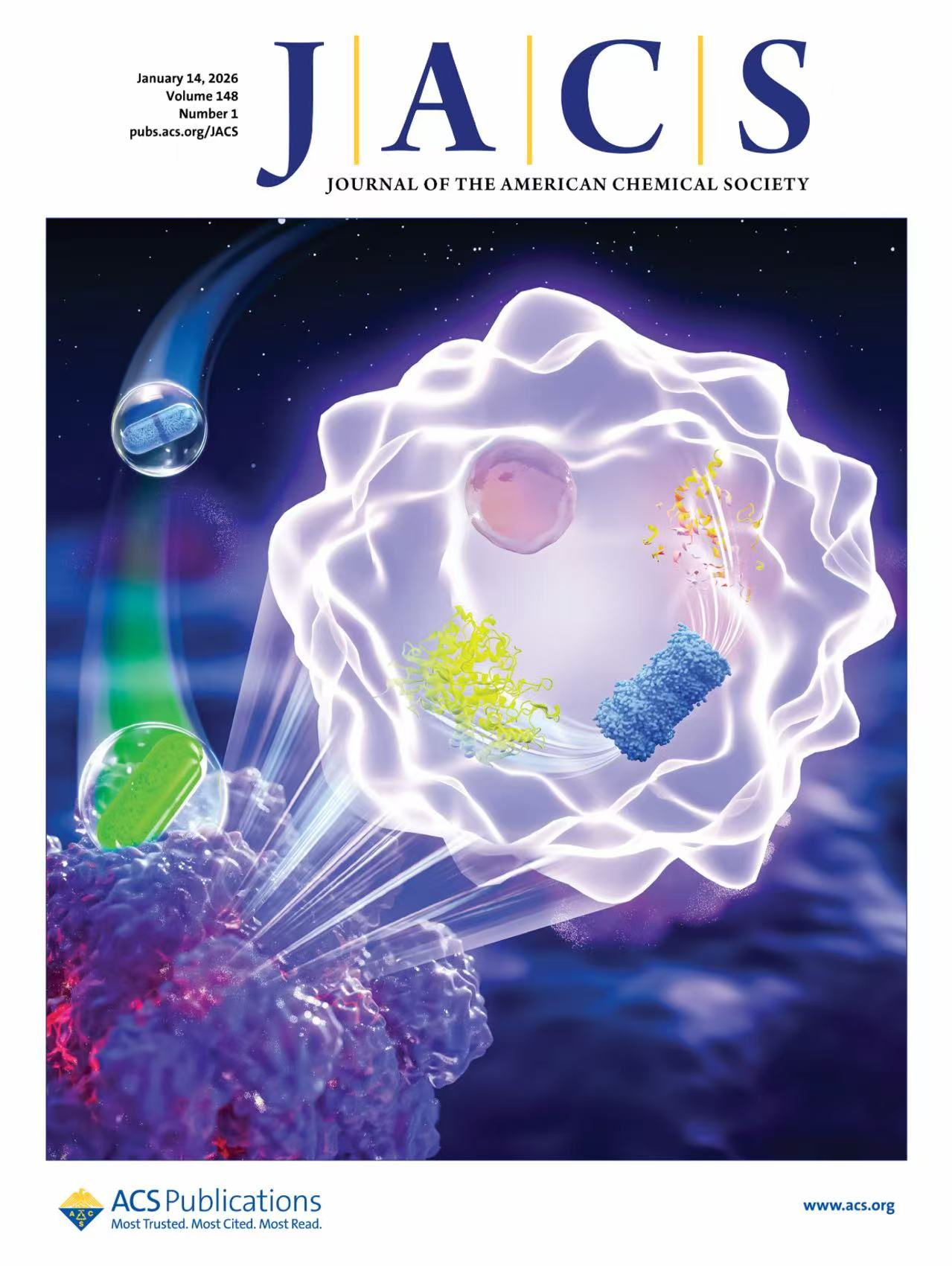
Image by Zhang’s Lab
Contact:
DIAO Wentong
Shanghai Institute of Materia Medica
E-mail: diaowentong@simm.ac.cn