


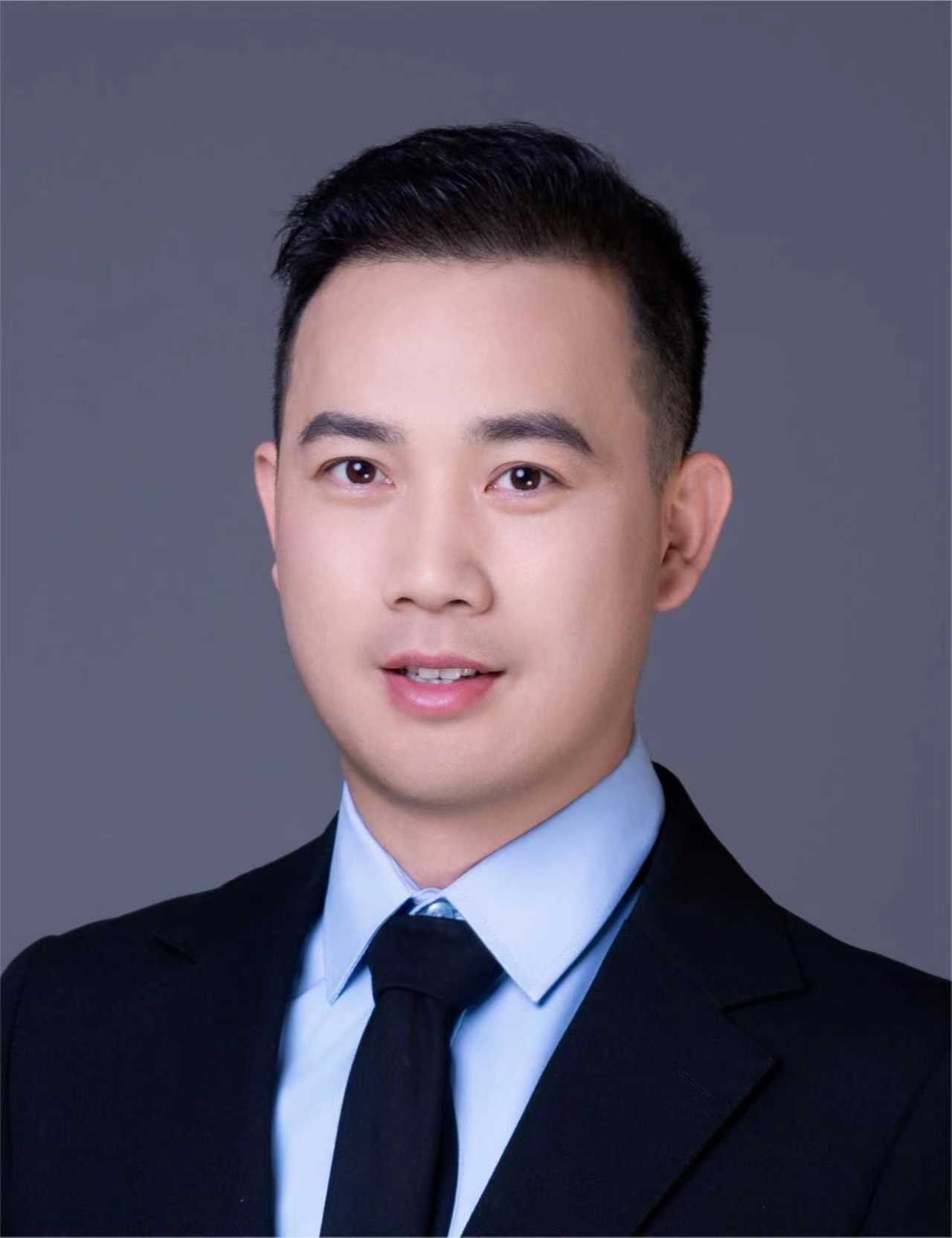
Biography
Prof. Xun Chen received his PhD degree from Huazhong Agricultural University. He then conducted postdoctoral research at the University of Vermont College of Medicine, where he began his work in human genomics and viromics. He then worked at Kyoto University Faculty of Medicine as a Project Researcher and subsequently as an Assistant Professor. In April 2024, he started his laboratory at the Shanghai Institute of Immunity and Infection, Chinese Academy of Sciences. Currently, Prof. Xun Chen serves as the principal investigator of the Multi-omics and AI research in infection and immunity unit at the Shanghai Institute of Materia Medica, Chinese Academy of Sciences.
In recent years, Prof. Chen has published more than 20 papers in prestigious journals such as Cell, Cell Genomics, Nature Genetics, Science Advances, Nature Communications, Genome Research, Briefings in Bioinformatics, Bioinformatics. He also developed many bioinformatics tools such as VIcaller, ERVcaller to investigate the biological functions of endogenous retroviruses and oncogenic viruses in the human genome.
Education Experience:
2008.09 - 2014.06 PhD, Crop Genetics and Breeding, Huazhong Agricultural University
2005.09 - 2006.06 Minor, Computer Science, Huazhong University of Science and Technology
2004.09 - 2008.06 BS, Agronomy, Huazhong Agricultural University
Work Experience:
2025.07-Now Principal Investigator, Shanghai Institute of Materia Medica Chinese Academy of Science
2024.04-2025.06 Principal Investigator, Shanghai Institute of Immunity and Infection Chinese Academy of Science
2021.06-2024.03 Program-Specific Assistant Professor, Institute for the Advanced Study of Human Biology, Kyoto University
2020.02-2021.05 Program-Specific Researcher, Institute for the Advanced Study of Human Biology
Kyoto University
2014.09-2019.05 Postdoctoral Associate, Department of Microbiology and Molecular Genetics, University of Vermont
Research Directions
1. Pathogen infection, human viromics, and immunity against infection.
2. Tumor multi-omics, neoantigen identification, and therapeutic target discovery.
3. Immune system evolution, individual immunity, digital immunity, etc.
Grants & Research Projects
2024-2027, National Key R&D Program of China (Sub-project Leader)
2024-2026 Shanghai Magnolia Talent Program Pujiang Project (PI)
2022-2024 ASHBi Fusion Research Grant (Co-PI)
2021-2024 Japan Society for the Promotion of Science (JSPS) Grant-in-Aid for Early-Career Scientists (PI)
2020-2022 ASHBi Fusion Research Grant (Lead PI)
Achievements
1. Developed novel algorithms for predicting known and unknown viral sequences in human.
2. Elucidated the correlation between endogenous retroviruses and individual antiviral immunity, and identified transposon elements as potential host factors associated with influenza virus infection.
3. Deciphered the oncogenic function of hepatitis B virus integration.
4. Established a new endogenous retrovirus annotation method, revealing the differential evolution of endogenous retrovirus sequences and functions across primate species.
morefold
Social Titles
morefold
Awards & Honors
1. 2017 ASHG/Charles J. Epstein Trainee Award for Excellence in Human Genetics Research
2. 2017 ACGA/The Association of Chinese Geneticists in America Trainee Awardees
morefold
Publications
Selected Publications
1.Chen Xun*#, Zhang Zicong, Yizhi Yan, Guillaume Bourque#, Fumitaka Inoue#: A phylogenetic approach uncovers cryptic endogenous retrovirus subfamilies in the primate lineage. Science Advances, 2025 Jul;11(29):eads9164. doi: 10.1126/sciadv.ads9164
2.Ren Haozhen*#, Chen Xun*#, Wang Jinglin*, Chen Ying, Hafiz Alex, Xiao Qian, Fu Shiwei, Advaitha Madireddy, Li Wei Vivian, Shi Xiaolei, Cao Jian#: Temporal and structural patterns of hepatitis B virus insertions in hepatocellular carcinoma. Journal of Medical Virology. 2023 Oct;95:e29187. doi: 10.1002/jmv.29187
3.Chen Xun*, Alain Pacis, Aracena A Katherine, Gona Saideep, Kwan Tony, Groza Cristian, Lin Yenlung, Sindeaux Renata, Yotova Vania, Pramatarova Albena, Simon Marie-Michelle, Pastinen Tomi, Barreiro B Luis, Bourque Guillaume#: Transposable elements are associated with the variable response to influenza infection. Cell Genomics. 2023 May;3(5):100292. doi: 10.1016/j.xgen.2023.100292
4.Chen Xun*, Li Dawei#: Sequencing facility and DNA source associated patterns of virus-mappable reads in whole-genome sequencing data. Genomics. 2021 Jan;113:1189-1198. doi: 10.1016/j.ygeno.2020.12.004
5.Chen Xun*, Li Dawei#: ERVcaller: Identifying polymorphic endogenous retrovirus and other transposable element insertions using whole-genome sequencing data. Bioinformatics. 2019 Oct;35(20):3913-3922. doi: 10.1093/bioinformatics/btz205
6.Chen Xun*, Kost Jason, Li Dawei#: Comprehensive comparative analysis of methods and software for identifying viral integrations. Briefings in Bioinformatics. 2019 Nov 27; 20(6):2088-2097. doi: 10.1186/1471-2164-15-37
7.Chen X*, Kost Jason, Sulovari Arvis, Wong Nathalie, Liang S Winnie, Cao Jian, Li Dawei#: A virome-wide clonal integration analysis platform for discovering cancer viral etiologies. Genome Research. 2019 May;29(5):819-830. doi: 10.1101/gr.242529.118
morefold
Back